If you have been to the dentist in the last few years, there’s a good chance you will have heard the term ‘composite’ mentioned. At the Smile Dental Practice, composite is something we use almost every day; not only to restore teeth, but also to improve how they look and feel as well. Our patients are often surprised at what can be achieved in a single appointment with this material. In many cases, small changes can make a noticeable difference, whether that is by repairing a chipped edge or similar.
Put simply, composite is a soft tooth-coloured material that is used to repair or reshape teeth and then hardened with a special light. What makes it particularly useful is that it can be built up gradually and shaped very precisely. From a patient’s point of view, the main benefit is that it blends in with their natural teeth. Once it has been polished, it tends to look very similar to natural enamel, especially when matched carefully to the surrounding teeth.
There is a reason composite has become so widely used. It allows us to treat problems in a fairly straightforward way, without removing more of the tooth than necessary. For example, if someone comes in with a very small area of decay or a chipped tooth, we can often treat it there and then. There is no need for impressions or scans in most cases, which keeps things simple for the patient.
A lot of the composite dental work that we do isn’t particularly dramatic. It is usually small, practical improvements that make teeth more comfortable or tidy things up a little. That might include repairing a corner that’s broken off, smoothing out a rough edge or even closing a slight gap between teeth. Occasionally, we might use composite more cosmetically, for example to even out the shape of a front tooth. Even then, the aim is usually to keep things looking natural.
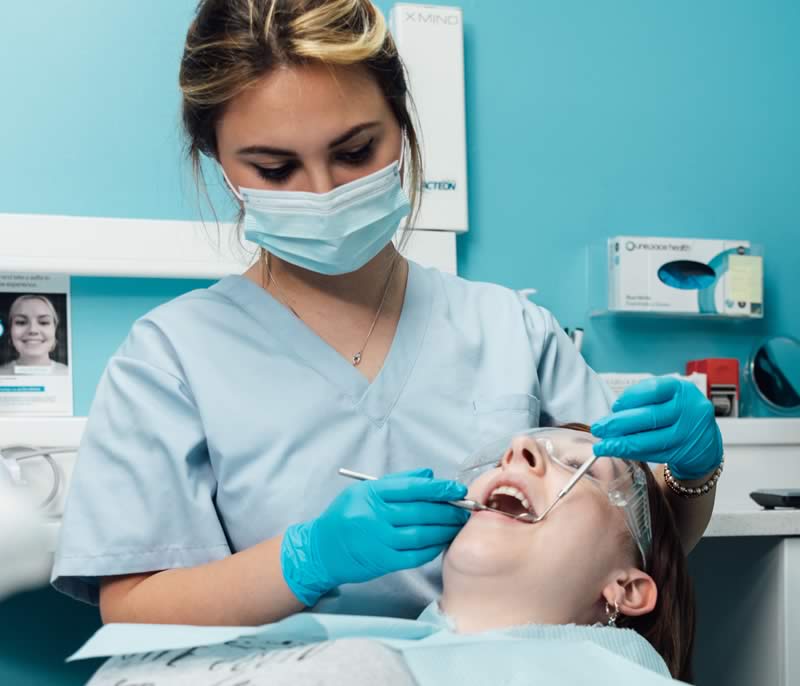
Most composite treatments are carried out in one visit and don’t take as long as people expect. If the tooth is sensitive, we will numb the area first. After that, the process is fairly methodical. The tooth is cleaned, and then the composite is added in layers, with each layer being hardened with a light before another is applied. Finally, it will be shaped and polished so that it looks and feels natural.
There isn’t a single answer to this, as it depends on where it is in the mouth and how much pressure is placed upon it throughout the day. A small restoration on a front tooth may last many years without any issues. Something on a back tooth that takes more force when chewing might need attention sooner. That said, with good care, composite restorations generally perform well. Regular dental check-ups help us to keep an eye on them and pick up any wear early.
Composite is a very useful material, but it is not completely immune to wear. Over time, it can also be vulnerable to staining, particularly if you drink a lot of tea, coffee, or red wine. It is also not always the best choice for very large restorations. In those cases, we may recommend something more robust, depending on the situation. We will always talk through the options before starting any treatment, so you know what to expect and what is likely to work best in the long term.
There is nothing complicated about caring for composite restorations. The same advice applies as it does for natural teeth; brush twice a day, clean between your teeth, and keep up with regular dental visits. If something doesn’t feel quite right, perhaps the surface feels rough or your bite feels different, you should ask us to check it for you. Small adjustments are usually quick and straightforward.
From our point of view, composite has become a reliable, flexible option that fits well with the way dentistry is practised today. It allows us to be more conservative, more precise, and often more efficient with treatment. For patients, that usually means fewer and potentially less stressful appointments. Most of the time, that’s exactly what people want; something that works well and doesn’t draw attention. At our Croydon dental clinic, it is a material we trust and use regularly, simply because it does the job well in a wide range of situations.
For minor restorative work or something more significant, please call the Smile Dental Practice on 020 8649 7911.
Design By Dental Media

